Winter nights often bring the steadiest air and the darkest skies of the year. They also bring frozen fingers, fogged corrector plates, and batteries that quit halfway through a session. The difference between a miserable hour and a memorable night usually comes down to preparation, not expensive gear. A little planning before you leave the house keeps your body warm, your optics clear, and your attention on the sky instead of on the next problem.
This checklist is built for real observing sessions: setting up in the cold, switching eyepieces with gloves on, and packing up when the temperature has dropped another ten degrees. Use it as a starting point, then adjust it to your scope, your climate, and how long you plan to stay out.
Dress for the Cold, Not the Car
Standing still is the hidden challenge of winter astronomy. You are not hiking or shoveling; you are mostly motionless at an eyepiece, which means your body produces far less heat than it does during ordinary outdoor activity. Dress for the temperature you will feel after an hour of standing, not the temperature you feel when you step outside.
Start with a moisture-wicking base layer, add an insulating middle layer, and finish with a windproof and water-resistant outer layer. Cotton is a poor choice next to the skin because it holds moisture and chills you when you sweat. Wool, fleece, and synthetic blends work better. Bring more insulation than you think you need, especially for your legs; a second pair of fleece-lined trousers or thermal leggings makes a surprising difference.
Protect the extremities
Hands are the hardest problem. You need enough dexterity to change eyepieces and focus a scope, but thin gloves alone will not keep you warm. A practical system is a thin liner glove for fine work, a heavier outer mitt or glove that you can slip off quickly, and chemical hand warmers in your pockets. Keep the warmers in a pocket, not directly against bare skin for long periods. A hat that covers your ears, a neck gaiter, and warm boots with room for thick socks matter more than a fashionable coat.
If you have a medical condition that affects circulation or temperature regulation, check with a healthcare professional before spending long hours in freezing conditions. Cold exposure is not a test of toughness; it is a risk to manage.
Keep the Optics Clear: Dew Shields and Heaters
Dew forms when an optical surface cools below the dew point of the surrounding air. In winter, the air can be dry, but clear nights still radiate heat away from exposed glass and metal. A corrector plate, objective lens, or eyepiece can fog or frost even when the forecast looks crisp and dry. The fix is not to wipe the glass repeatedly; it is to slow the cooling and add gentle heat where needed.
Begin with a dew shield. It extends the path that moist air must travel to reach the front glass and blocks some of the sky’s radiant cooling. For refractors and catadioptric scopes, a snug-fitting shield is often enough for short sessions. For longer sessions, add a dew heater strip around the corrector plate, objective cell, or eyepiece. Use a controller to keep the strip just warm to the touch rather than hot. Too much heat can create local air currents and degrade the view.
A simple dew-control sequence
- Attach the dew shield before the scope cools down.
- Fit heater strips around the front element and, if needed, the finder and eyepiece.
- Set the controller low at the start and increase only if fog begins to form.
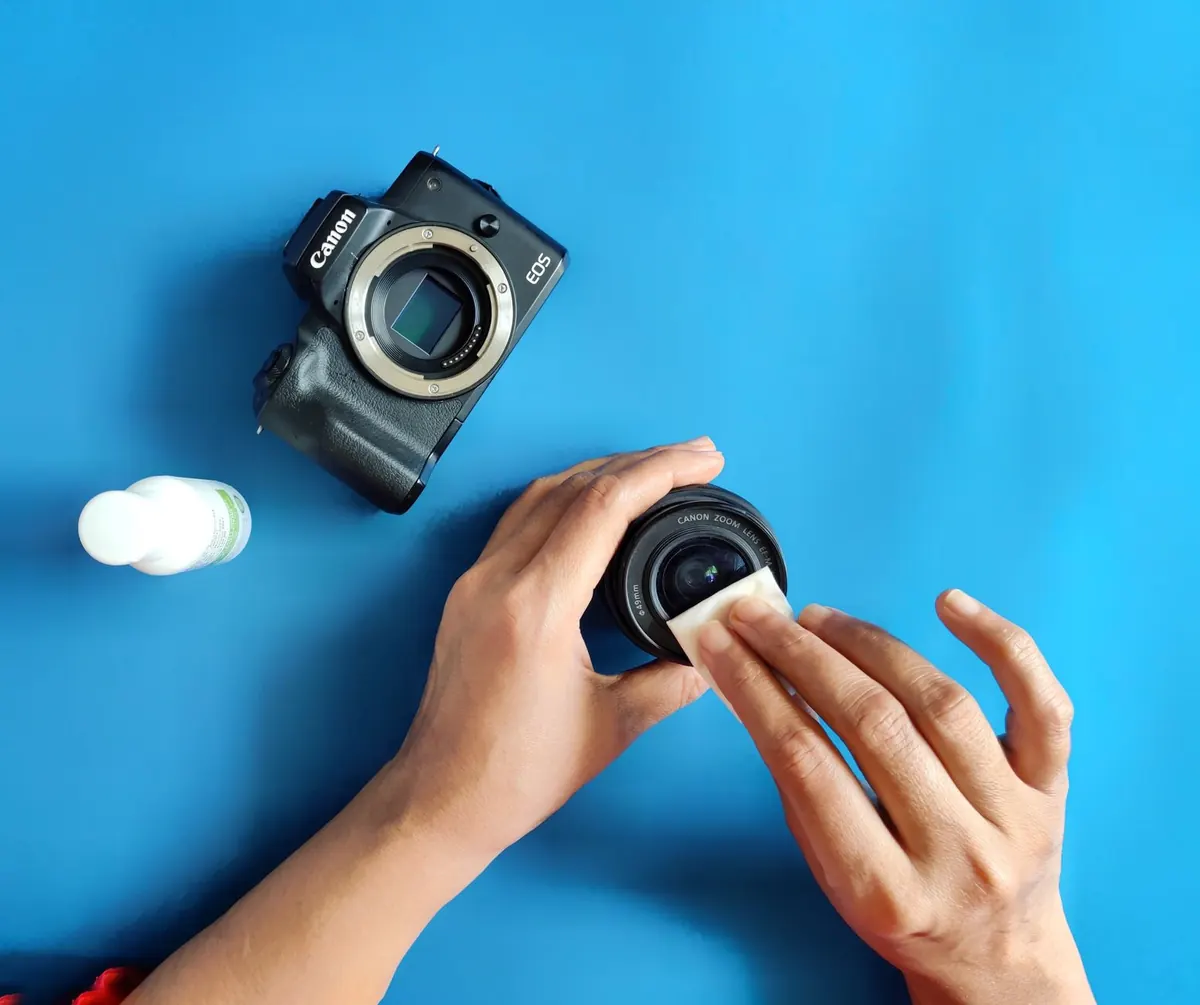
- Keep a blower bulb and a clean microfiber cloth in your kit, but use them sparingly.
- Never wipe frost off a corrector plate or lens with a dry cloth; let gentle heat clear it instead.
Eyepieces fog quickly when you breathe near them or bring them close to a warm face. Keep spare eyepieces in a case with a desiccant pack, and cap the one in the focuser when you step away. A small eyepiece heater or a pocket warmer wrapped around the eyepiece case can keep your most-used glass ready.
Cold-Weather Power: Batteries, Cables, and Spares
Batteries behave differently in freezing temperatures. Chemical reactions slow down, so a battery that works perfectly indoors may deliver less power or fail suddenly outside. This affects GoTo mounts, dew controllers, cameras, red lights, and hand controllers. The solution is part insulation, part spare capacity, and part discipline about keeping power sources warm.
Keep spare batteries in an inside pocket rather than a cold accessory case. For a mount or dew controller that runs from an external battery pack, place the pack in an insulated pouch or a small cooler with a hand warmer, but do not let the battery overheat. Bring a longer power cable if needed, and check that cables remain flexible in the cold; stiff cables can pull on ports or fail to coil properly. Label your spares so you are not guessing in the dark.
Build a small power pouch
- Two sets of spare batteries for the mount, finder, and red light.
- A charged USB power bank kept close to your body.
- Insulated pouch or bubble wrap for the main battery pack.
- Short extension cable and a spare power lead if your mount uses one.
- Small multi-tool or cable ties for strain relief.
Before you leave, test the mount and dew controller with the exact batteries and cables you plan to use. Charge everything the day before, and let cold batteries warm to room temperature before recharging them. If a device shuts down unexpectedly, suspect the cold before you assume it is broken.
The Night-Before Checklist
Most winter problems are easier to prevent than to fix in the dark. Pack and test the night before, then keep the checklist simple enough that you will actually use it.
- Check the forecast for temperature, wind, and humidity, not just cloud cover.
- Set out clothing layers, boots, hat, gloves, and hand warmers.
- Charge batteries and pack spares in a warm pocket.
- Test the dew heater and controller; pack the dew shield.
- Clean eyepieces and pack them with desiccant in a sealed case.
- Prepare a red flashlight, star chart or app, notebook, and pencil.
- Fill a thermos with a warm drink and pack a high-energy snack.
- Bring a folding chair, a foam mat, and a blanket for breaks.
- Load the scope and mount in the car early so you are not rushed.
Keep the checklist in your accessory case. A written list beats memory when your hands are cold and the car is already running.
Small Habits at the Eyepiece
Once you are set up, a few habits protect both your comfort and your optics. Avoid breathing directly onto the eyepiece; angle your head or use an observing hood to block warm breath and stray light. Change eyepieces quickly and cap the focuser when you step away. If you use a finder or guide scope, check it for dew before it fogs completely, and keep its heater on a low setting.
Take breaks before you feel cold. A short walk, a warm drink, or a few minutes in the car can reset your hands and attention. Use red light sparingly to preserve dark adaptation, and keep your phone dimmed or in a pocket. When the cold starts making you clumsy, stop handling expensive glass and secure the scope. A session cut short is better than a dropped eyepiece.
Packing Up Without Cracking Anything
The end of a winter session is where careless mistakes happen. Cold metal and glass are less forgiving, and condensation forms fast when you bring equipment into a warm house. Put caps back on eyepieces and the scope before you carry anything inside. If the scope is very cold, place it in its case or a sealed plastic bag before bringing it indoors, then let it warm slowly to room temperature. Do not wipe condensation from the lens; let it evaporate.
Remove batteries if the equipment will sit unused for a long period, and open cases slightly once indoors so trapped moisture can escape. Give optics time to dry before you store them. A small desiccant pack in the case helps, and a dry, stable storage spot is better than a damp garage.
A Final Cold-Night Routine
The best winter setup is the one you can repeat without thinking. Dress in layers, shield and gently heat the optics, keep batteries warm, and pack spares before you leave. Use the night-before checklist, take breaks before the cold makes decisions for you, and pack up slowly enough to protect the glass. Do that, and winter becomes a season to look forward to rather than one to endure.
Photo: ning wong / Pexels